
AI Is Turning Technical People Into Salespeople.
Salesforce did it. Earlier this month, Microsoft did it too.When two of the world's biggest sales organizations pivot, the rest of the market usually follows.Both companies are replacing many traditional support and consulting activities with AI while redeploying technical, customer-facing employees into roles that are expected to identify opportunities, expand accounts, and directly contribute to revenue. Most of the headlines focused on AI replacing jobs and automating work. Fair enough. But sales leaders and CEOs should be paying attention to the other half of the story.
Salesforce did it. Earlier this month, Microsoft did it too.
When two of the world's biggest sales organizations pivot, the rest of the market usually follows.
Both companies are replacing many traditional support and consulting activities with AI while redeploying technical, customer-facing employees into roles that are expected to identify opportunities, expand accounts, and directly contribute to revenue. Most of the headlines focused on AI replacing jobs and automating work. Fair enough. But sales leaders and CEOs should be paying attention to the other half of the story.
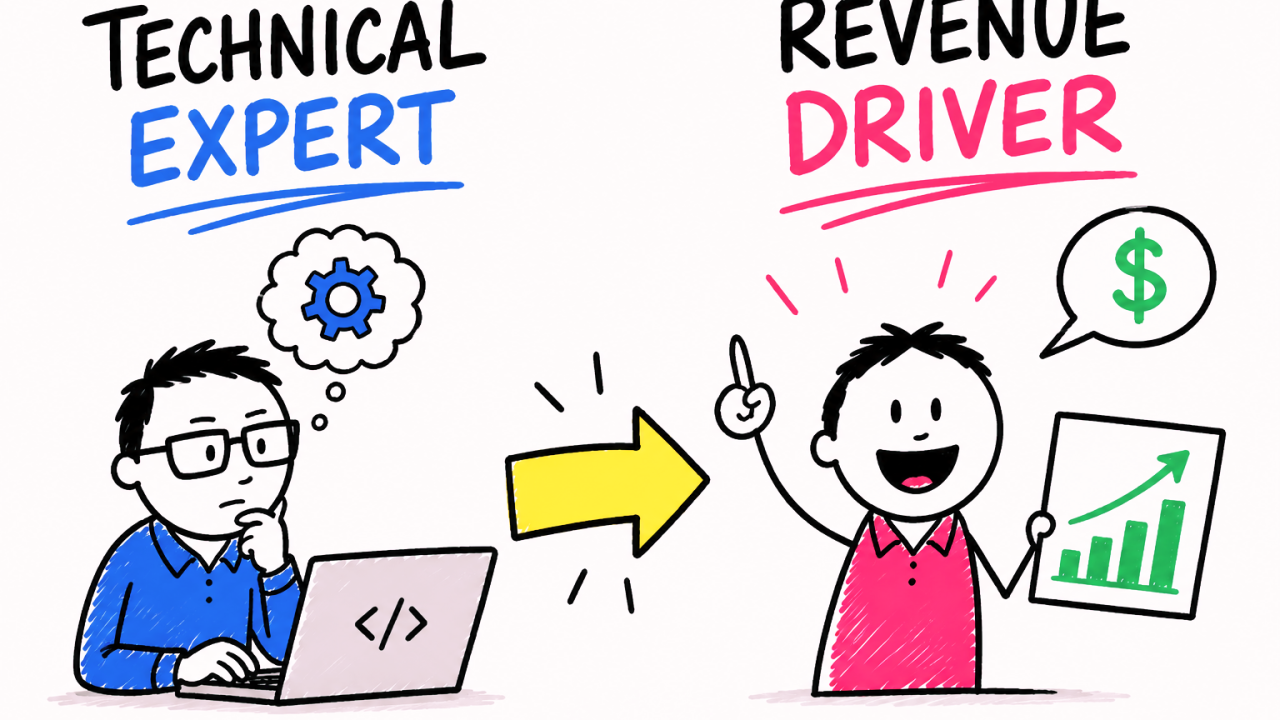
Traditional technical and customer-facing roles are being given a commercial mandate.
The bigger trend isn't AI replacing salespeople. It's sales becoming everyone's job.
We're moving away from a world where revenue sits exclusively with Account Executives and Business Development Reps. Instead, customer-facing teams are becoming far more distributed, with consultants, customer success managers, technical specialists, and support teams increasingly expected to identify opportunities, expand accounts, and contribute to growth.
Grab your popcorn. This won't be an easy transition.
The funny thing is, this isn't actually new.
We've seen versions of this for years. It happens during market downturns when everyone has to help keep the lights on. It happens in startups, where asking "Who's in sales?" is met with everyone having to raise their hand. It happens in consulting firms, legal firms, and professional services organizations where technical experts are increasingly expected to develop business as well as deliver it.
The challenge is predictable.
Most people who didn't choose a career in sales don't actually want to be in sales.
When organizations suddenly hand them a revenue target, one of three things usually happens:
- They resist and continue behaving as if nothing has changed.
- They overcompensate, become overly commercial, and damage the customer relationships that made them valuable in the first place.
- They adapt their mindset, build new skills, and learn how to create value for both customers and the business.
After working with customer-facing teams making this transition for (good lord) more than 20 years, here's what I've learned.
First, traditional sales training rarely works.
I used to think it would. I was wrong.
Training designed for career salespeople often falls flat with technical professionals. The language is wrong. The examples don't resonate. The objectives feel disconnected from how they see themselves. The training has to meet them where they are and help them build commercial confidence without asking them to become someone they're not.
Second, mindset comes before skillset.
Sales still carries a lot of baggage. Many technical professionals equate selling with being manipulative or pushy. Until that belief changes, no amount of questioning frameworks or sales methodology will stick.
Third, these employees often become the best commercial people in the business.
Their reluctance to "sell" is actually an advantage. They're naturally curious, credible, and focused on solving problems rather than pushing products. With the right coaching, that hesitation becomes a strength instead of a weakness.
The companies embracing AI aren't just redesigning workflows. They're redesigning customer-facing careers.
The organizations that get ahead won't simply retrain salespeople. Instead they'll teach consultants, engineers, customer success managers, solution architects, and support teams how to create commercial value without sacrificing the trust they've worked so hard to build.
That's the real talent shift AI is creating. And for most organizations, the biggest challenge won't be the technology.
It will be teaching an entirely new generation of people how to sell.
++++++